Colonoscopy Biopsy and Polyp Removal Cost: Pathology Fees and What to Expect
{ if eq .Lang "zh" }{ else }{ end }The procedure itself took 35 minutes. The pathology bill arrived 6 weeks later.
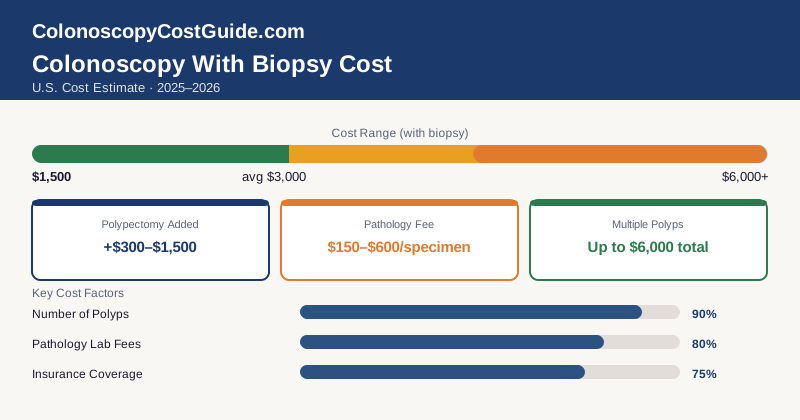
If your doctor removes a polyp or takes a biopsy during your colonoscopy, your bill doesn’t end when you leave the recovery room. A separate pathology claim comes from a lab you’ve never interacted with, for a service you didn’t specifically consent to, and it can range from $150 to over $1,000 depending on the number of specimens and your insurance situation.
Here’s exactly what those charges are, which CPT codes trigger them, and how to avoid being blindsided.
The CPT Codes That Change Your Bill
When a colonoscopy finds nothing, the procedure is typically billed under a single code:
- CPT 45378: Colonoscopy through splenic flexure, diagnostic or screening, no removal of tissue
When your doctor removes tissue, additional codes are added:
- CPT 45380: Colonoscopy with biopsy — taking a small tissue sample without using a snare
- CPT 45381: Colonoscopy with submucosal injection — a technique used before removal of larger lesions
- CPT 45384: Colonoscopy with removal of polyp by hot or cold biopsy forceps
- CPT 45385: Colonoscopy with removal of polyp by snare technique (polypectomy) — the most common removal method
- CPT 45388: Colonoscopy with ablation of tumor or polyp using a technique other than snare
Each code billed adds to the facility fee and the physician fee. These aren’t minor additions — CPT 45385 adds several hundred dollars to the facility charge and another $100–$200 to the professional fee.
| Procedure | CPT Code | Added Facility Fee | Added Professional Fee |
|---|---|---|---|
| Biopsy only | 45380 | $200 – $500 | $80 – $180 |
| Snare polypectomy (one polyp) | 45385 | $300 – $700 | $100 – $250 |
| Snare polypectomy (additional polyp) | 45385 x2 | $150 – $400 each | $80 – $150 each |
| Ablation | 45388 | $400 – $900 | $120 – $300 |
The Pathology Bill: What It Covers and What It Costs
Every tissue sample removed during your colonoscopy goes to a pathology lab for microscopic examination. The pathologist is looking for dysplasia, cancer, or the type of polyp (adenoma, hyperplastic, sessile serrated) — information that determines your future surveillance schedule.
Pathology is billed by the lab, not your GI physician or the facility. You’ll receive a separate bill, typically 3–8 weeks after the procedure. The lab may be:
- The hospital’s own pathology department (likely in-network if your hospital was in-network)
- An independent reference lab contracted with your ASC (may or may not be in-network)
- A national reference lab like Quest Diagnostics or LabCorp (usually in-network with most major insurers)
Typical pathology charges per colonoscopy specimen:
| Pathology Billing Scenario | Approximate Charge |
|---|---|
| 1 specimen, in-network lab | $100 – $300 (allowed amount) |
| 2–3 specimens, in-network lab | $200 – $600 |
| 1 specimen, out-of-network lab | $300 – $700+ |
| Multiple specimens, out-of-network lab | $500 – $1,500+ |
| After insurance adjustment (in-network) | $20 – $150 typical patient cost |
The Out-of-Network Pathology Trap
This is where most pathology surprise bills originate. You choose an in-network hospital or ASC. Your GI physician is in-network. But the pathology lab that processes your tissue sample operates as a separate entity — and your insurer may not have a contract with them.
The No Surprises Act has helped with this: as of January 2022, healthcare providers and facilities are prohibited from billing patients above in-network cost-sharing rates for many ancillary services (including lab work) when the main facility is in-network. But the protections have exceptions and enforcement gaps.
If you receive a pathology bill that seems disproportionately high:
- Check whether the lab is in-network on your insurer’s portal
- If out-of-network, cite the No Surprises Act in your appeal to the lab and insurer
- Ask your GI physician’s office which lab they use — before the procedure — and verify network status
What to Ask Your GI Office Before Your Procedure
“If you remove a polyp or take a biopsy, which pathology lab will process the specimens?”
Get the lab name and look it up on your insurer’s provider directory. If the lab isn’t in-network, ask whether your GI practice can use an alternative lab, or send specimens to a lab your insurer contracts with. Many practices can accommodate this request — they just need you to ask.
How Many Polyps Could Be Found?
About 30–40% of average-risk adults have at least one polyp found during colonoscopy, according to ACG data. Most are small and removed during the same procedure. The average polyp-positive colonoscopy involves 1–3 polyps. Each one generates a separate pathology specimen and a separate line item on your pathology bill.
FAIR Health data shows that a colonoscopy with polypectomy (CPT 45385) and 2–3 pathology specimens runs:
- Total billed charges: $2,800 – $5,500 at an HOPD
- Insurance allowed amount (commercial): $1,400 – $3,200
- Patient out-of-pocket (with deductible): $300 – $1,200 depending on plan
That’s a dramatically different bill than the $0 you were expecting for a screening colonoscopy.
Screening-to-Diagnostic Reclassification Risk
Adding CPT codes 45380 or 45385 to a visit that started as screening is exactly what triggers the billing reclassification problem. Your insurer may argue the procedure is no longer “preventive” once tissue was removed, converting it to a diagnostic encounter with different cost-sharing rules.
The screening vs. diagnostic colonoscopy cost article covers your rights and the current legal landscape around this issue in detail.
The short version: expect a pathology bill if tissue was removed. Budget $100–$300 for in-network pathology, more if your deductible isn’t met, and verify the lab’s network status before you schedule.
{ if eq .Lang "zh" }