Colonoscopy Insurance Denial: Why It Happens and How to Appeal Successfully
{ if eq .Lang "zh" }{ else }{ end }The denial letter is two paragraphs of jargon and one line telling you that you owe $1,400. Most patients pay it. They shouldn’t.
Colonoscopy insurance denials have among the highest appeal success rates in healthcare. The procedure is well-established, clinically indicated, and — for screening — legally mandated to be covered at $0. Here’s why denials happen, what to say, and how to get them reversed.
The Three Most Common Reasons Colonoscopy Claims Are Denied
1. Wrong Diagnosis Code: Screening Coded as Diagnostic (or Vice Versa)
This is the most common billing error. Your GI physician or the facility uses the wrong diagnosis code — a symptom code when the procedure was screening, or a screening code when there were actual symptoms — and your insurer processes it under the wrong benefit category.
Result: A screening colonoscopy gets treated as a non-preventive service and hits your deductible. Or a diagnostic procedure is rejected as “not covered” because it was coded as if it were a second preventive colonoscopy within the covered interval.
Fix: Request an itemized billing statement and EOB from your insurer. Compare the diagnosis code on the claim to what your doctor documented in your medical record. If the codes don’t match the clinical picture, ask your GI physician to submit a corrected claim with the correct diagnosis code.
2. Out-of-Network Provider
Your procedure was coded correctly, but one provider — almost always the anesthesiologist or pathology lab — was out of your network. Your insurer applies out-of-network cost-sharing, or denies the claim as non-covered under your plan’s out-of-network rules.
Fix: Check the No Surprises Act protections. If the facility was in-network and the out-of-network anesthesiologist was assigned to your case without your informed consent, you may have NSA protections limiting your liability to in-network cost-sharing levels. Contact your insurer, cite the No Surprises Act (effective January 2022), and request the claim be reprocessed at in-network rates.
3. Medical Necessity Determination
The insurer denies a diagnostic colonoscopy as “not medically necessary” — usually because the documentation provided doesn’t meet their clinical criteria. This is more common for:
- Colonoscopy more frequent than the covered interval (surveillance colonoscopies)
- Diagnostic colonoscopy without documented symptoms in the submitted claim
- Anesthesia for colonoscopy when conscious sedation would have been alternative
Fix: Ask your GI physician to provide a Letter of Medical Necessity (LMN) with the appeal. The letter should cite specific symptoms, clinical findings, or risk factors that justify the procedure and the clinical guidelines (ACG, ASGE, USPSTF) that support it.
| Denial Reason | Most Effective Fix | Success Rate |
|---|---|---|
| Wrong diagnosis code | Corrected claim submission | Very high |
| Out-of-network provider (NSA situation) | NSA complaint + claim reprocessing | High |
| Out-of-network (voluntary choice) | Appeal with hardship + ask for rate reduction | Moderate |
| Not medically necessary | Letter of Medical Necessity + peer-to-peer review | High |
| Wrong billing interval | Documentation of covered indication | High |
| Preventive coding rejected | ACA Section 2713 appeal + state insurance department complaint | High |
The Appeal Process: Step by Step
Step 1: Request the Denial in Writing
If you received a verbal denial, request a written Explanation of Benefits (EOB) or formal denial letter. The denial must specify:
- The specific reason for denial
- The clinical criteria used (if medical necessity)
- Your appeal rights and deadlines
By law (ERISA and ACA), you have the right to a full and fair review of any denied claim.
Step 2: Internal Appeal
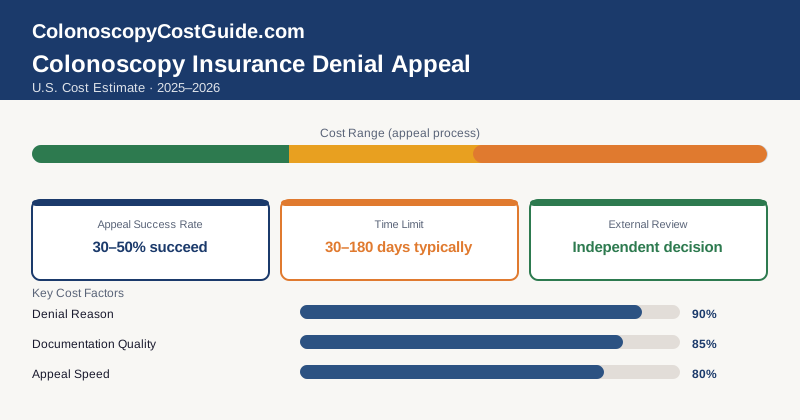
File an internal appeal with your insurer. You typically have 180 days from receiving the denial to file an internal appeal.
Your appeal letter should:
- Clearly identify your claim (claim number, date of service, provider, procedure)
- State the denial reason and why you believe it’s incorrect
- Cite the applicable coverage requirement (ACA Section 2713 for preventive, or your plan’s benefit document for diagnostic)
- Attach supporting documents (physician notes, LMN, corrected coding if applicable)
Template Language for a Colonoscopy Appeal Letter
“Dear [Insurer Name] Appeals Department:
I am writing to appeal the denial of Claim #[XXXXX] for date of service [DATE] for colonoscopy CPT [45378/45385] at [facility name].
Your denial states [stated reason]. I respectfully disagree for the following reasons:
[Reason 1: e.g., “This procedure was a preventive screening colonoscopy as documented in the attached medical records. Under ACA Section 2713 and [insurer’s] preventive care coverage policy, this service is required to be covered at zero cost-sharing for a [age]-year-old average-risk patient.”]
[Reason 2: e.g., “The polypectomy performed during this screening visit is covered as part of the preventive encounter under your plan’s updated 2023 policy and the Consolidated Appropriations Act of 2023.”]
I am attaching: [EOB, medical records, LMN, billing statement, corrected claim]
I request that you reprocess this claim under the correct benefit category. If you deny this appeal, please provide the specific plan provision and clinical criteria supporting the denial, as required by ERISA Section 503.
[Signature, contact info, member ID]”
Step 3: Request a Peer-to-Peer Review (Medical Necessity Denials Only)
If your denial is for medical necessity, ask your GI physician to request a peer-to-peer review — a direct physician-to-physician call between your doctor and the insurer’s medical director. This is not an appeal step; it’s a parallel process that often resolves medical necessity denials before a formal appeal decision.
Most GI physicians have done this many times. It takes 15 minutes and has a high reversal rate for well-documented clinical cases.
Step 4: External Review
If your internal appeal is denied, you have the right to external review by an independent reviewer not affiliated with your insurer. This right is guaranteed under the ACA for most plans.
File for external review through:
- Your insurer’s external review process (they’ll direct you to the appropriate independent organization)
- Your state insurance commissioner’s office
External reviews are free to you. The independent reviewer’s decision is binding on your insurer in most cases.
Step 5: State Insurance Department Complaint
Filing a complaint with your state’s insurance department isn’t an appeal step — it’s a parallel escalation. Regulators receive your complaint and sometimes contact the insurer directly, which can accelerate resolution. It also creates a formal record.
When to Get Help
If you’re dealing with a large bill (over $500), a complex denial, or a situation where your insurer isn’t responding, consider:
- Patient Advocate Foundation (patientadvocate.org): Free case management services for patients with insurance disputes
- CMS Marketplace Help: For ACA marketplace plan issues: 1-800-318-2596
- Your state’s consumer assistance program: Many states have free consumer assistance programs for insurance disputes
Colonoscopy coverage is among the most legally protected areas of health insurance. You have real rights, the procedure is guideline-supported, and appeal success rates are high when you document correctly.
{ if eq .Lang "zh" }